Choosing the right stabilizer
Which backing and topping to use for velvet, jersey, towels, caps and traditional garments.
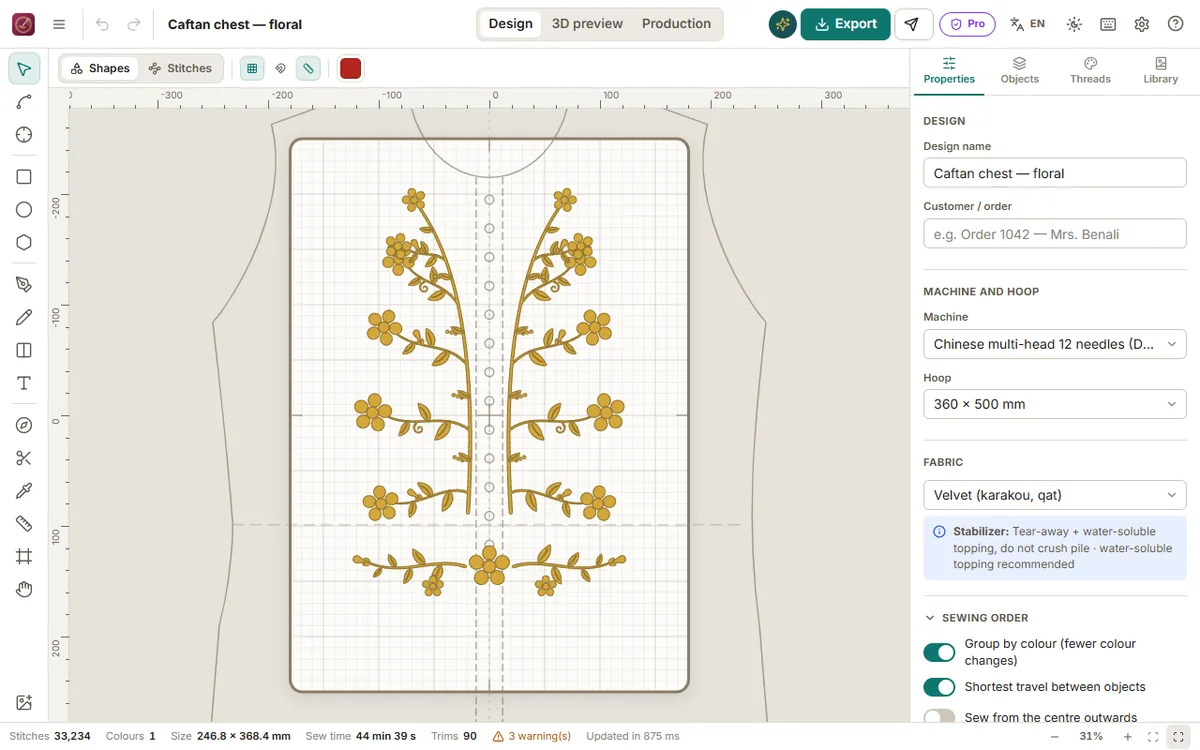
The stabilizer holds the fabric still while the needle works. The wrong one is the first cause of puckering and misalignment. Tarz suggests a stabilizer for the fabric you choose in the Design panel; this table explains the choice.
| Fabric | Backing | Topping |
|---|---|---|
| Velvet (karakou, chedda, wedding cushions) | Cut-away, medium | Water-soluble film — keeps stitches above the pile |
| Satin, silk, organza | Light cut-away or no-show mesh | Not needed; use a fine needle (65/9 or 70/10) |
| Cotton, linen, gandoura fabric | Tear-away, medium | Not needed |
| T-shirt, jersey, stretch | Cut-away (never tear-away) | Optional for small text |
| Towels, terry cloth | Tear-away | Water-soluble film, always |
| Denim, canvas, bags | Tear-away, heavy | Not needed |
| Caps | Cap backing (tear-away, stiff) | Not needed |
| Leather, faux leather | Cut-away, light; hold with tape, not pins | Not needed |
Good practice
- Hoop the fabric and the backing together, taut like a drum but not stretched. Stretched jersey springs back after unhooping and pulls the design.
- For velvet that must not be marked by the hoop, hoop only the sticky backing and place the velvet on top.
- Dense designs (large fills, Arabic calligraphy with wide letters) need a stronger backing: add a second layer rather than increasing the density.
- Test on a scrap of the same fabric before a customer piece.